


Weighted vests are the ultimate biohack. They are designed to turn everyday movements into metabolic conditioning and bodyweight workouts into strength-building powerhouses. But for many people, the results don’t match the hype. Instead of burning more fat and building endurance, they end up with shoulder pain, neck chafing, destroyed running mechanics, and a bulky piece of gear collecting dust in the closet.
If this sounds familiar, it isn't your work ethic that is failing—it’s your gear. Disappointing results almost always come down to weighted vests designed without a fundamental understanding of biomechanics. A weighted vest should make your muscles work harder; it should not make your joints hurt or cause bad form.
The good news? These problems are fixable. Better yet, many of them can be avoided entirely by choosing a modern, intelligently designed weighted vest that works with your body instead of against it.
In this post, we break down the five critical mistakes destroying your weighted vest results, and exactly how to fix them for good.
What Most People Get Wrong About Loaded Movement
A weighted vest is a resistance tool, but it is not a dumbbell.
When you hold a dumbbell, you are isolating a muscle. When you wear a vest, you are integrating load into your entire skeletal structure. The goal is to create a state of "hypergravity" that forces your cardiovascular system to become more efficient and your postural muscles to fire harder.
The Golden Rule: The added load should challenge your effort, but it should never alter your posture, stride, or breathing mechanics.
When you treat a weighted vest like a heavy backpack rather than a biomechanical tool, you set yourself up for these five massive mistakes.
Mistake #1. Starting Too Heavy
The Mistake: Believing that a heavier weighted vest provides more resistance and thus better or faster results.
The Consequence: This is the fastest way to derail your progress. In reality, when the body is overloaded, it starts working against the added weight, which alters your body’s natural biomechanics. Your stride shortens, you lean forward at the hips, and your lower back absorbs the torque. You aren't "pushing harder"—you are just reinforcing terrible movement patterns that lead to knee pain, shoulder pain, shin splints, and chronic lower back tightness.
The Fix: Start lighter than you think. Most research and expert guidance recommend adding 3-5% of your body weight. This added weight is small enough to avoid disrupting posture and gait, yet still increases metabolic demand and muscular engagement.
Aion approaches this issue through Fractional Loading™, a patented technology that adds weight according to your body frame. In addition, our Dynamic Resistance™ technology maximizes the effective resistance of this added weight through compression and heat capture. Instead of overwhelming the body, Aion enhances everyday movement, be it walking, running, or training, while preserving proper mechanics.
Mistake #2. Wearing Plate Carriers for Cardio
The Mistake: Using a rigid, military-style plate carrier for walking, running, or dynamic workouts like HIIT.
The Consequence: Plate carriers are originally designed for protection or to simulate carrying military equipment, they are not optimal for fitness. While plates add resistance, dynamic movements cause them to shift, bounce, and slam into the body. Worse, they restrict the expansion of your diaphragm. What you perceive as a "hard cardio workout" is partially oxygen deprivation because you literally cannot take a full breath. Eventually, this reduces endurance, leading to early fatigue and, finally, poor workout results.
Additionally, chafing and pressure points form around the neck and shoulders. In fact, neck and shoulder discomfort from rubbing the weighted vest is the most common complaint among users of weighted vests or plate carriers.
The Fix: For cardio, flexibility matters more than rigidity. Your weighted vest should move with you, adding resistance as you breathe, stride, and stretch.
Aion’s Dynamic Resistance™ in our workout vests combines weight loading with cutting-edge compression technology. As you breathe and move, the weighted vest expands and contracts, ensuring that you get maximum resistance with every breath and movement.
Instead of bouncing against the body, the compression makes the weight stay close, allowing full oxygen intake and smooth motion. The result is a challenging workout that still feels natural, and most importantly, sustainable.
Mistake #3. Ignoring Anatomy (The “Unisex Vest” Problem)
The Mistake: Women wearing “unisex” weighted vests, which are almost always just scaled-down men’s designs.
The Consequence: While a unisex vest may provide good results for men, it’s often ineffective for women. The female torso is anatomically different—shorter in length, narrower at the shoulders, and wider at the hips. A rigid, unisex vest places flat weight directly on the chest, causing severe discomfort and restricted breathing. To compensate, women often hike the vest up, shifting the load entirely onto their neck and upper traps, leading to shoulder and neck tension, poor posture, and often headaches.
The Fix: Anatomical design is not optional—it’s essential. Your weighted vest should work with your body frame so that your movement becomes a fluid motion, not a constant adjustment.
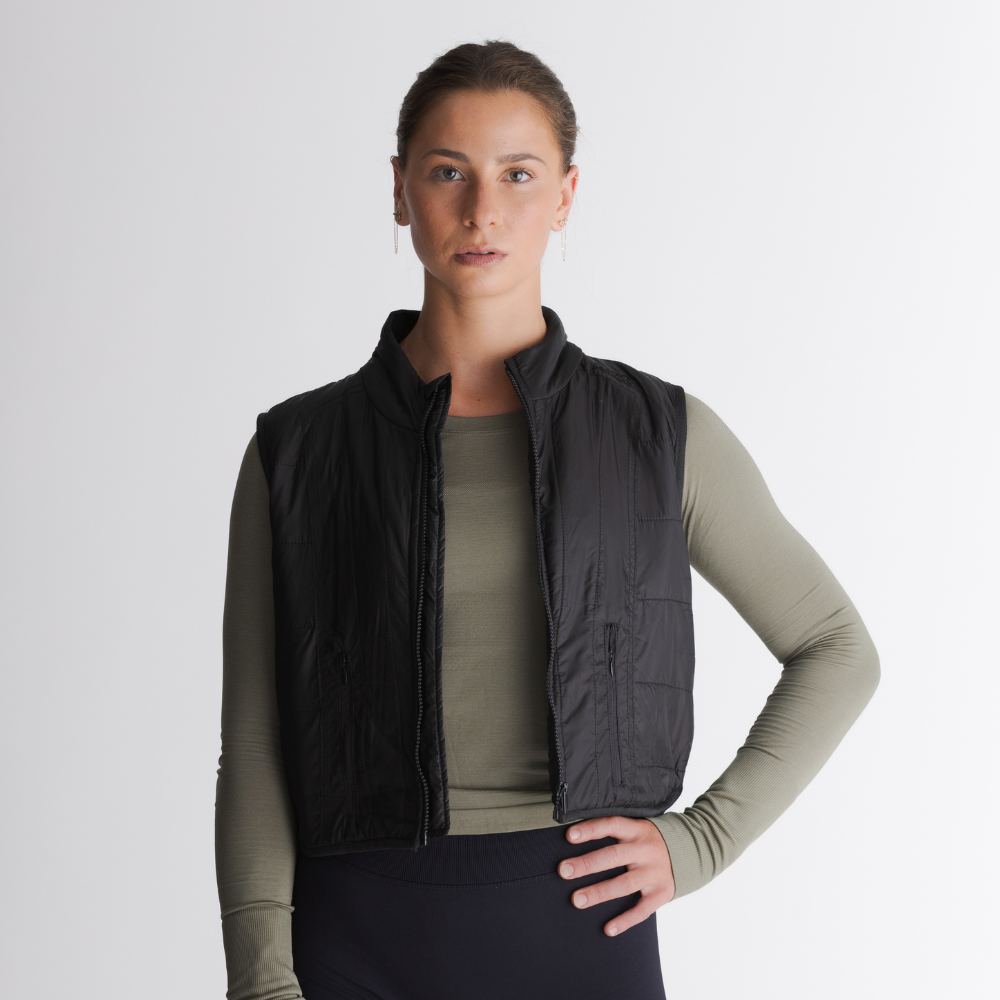
Aion engineers specific cuts for women that contour the torso, distribute the weight around the core rather than on top of it, and sit at the proper length so you can move naturally. Ladies, it’s time for you to have a weighted vest designed FOR you so you can focus on performance instead of managing the discomfort of wearing a men’s weighted vest.


Mistake #4. Poor Weight Distribution (The “Tech Neck” Effect)
The Mistake: Wearing a vest that hangs all of its weight from narrow shoulder straps.
The Consequence: This triggers your body into a posture similar to staring down at your phone ("tech neck"). The straps dig into your trapezius muscles and compress the brachial plexus nerves. The result is numbness in your arms, a stiff neck, and a forward-rounded posture. Over time, these symptoms may lead to cervical spine issues and chronic discomfort, especially for users who wear their vest for long walks or extended daily activities.
The Fix: A weighted vest must distribute weight 360 degrees around the torso. Aion’s design ensures even loading across the front, back, and sides. By hugging the core, the weight is supported by your entire skeletal system, not just your shoulders.
Mistake #5. Inconsistency Due to Friction (The “Closet” Mistake)
The Mistake: A heavy, uncomfortable weighted vest that’s difficult to put on or looks too intense for public wear.
The Consequence: A 40 lb vest sitting in your closet burns zero calories. If your vest takes five minutes to adjust the Velcro straps, or if it makes you look like a SWAT team member at the local park, it creates friction before you even start your workout.
This friction eventually kills consistency. It becomes easier not to use it. And a vest that stays in the closet most of the time delivers zero results.
The Fix: Choose a weighted vest designed for workouts and real-life movements. Putting on your vest should not feel like a task or a disruption to your daily life. Aion is built for lifestyle integration. It’s easy to slip on, comfortable, and sleek enough for inside and outside the gym. There are no barriers to use, so consistency becomes automatic—and that’s when results actually happen.
Stop Fighting Your Gear. Get The Best Weighted Vest Results with Aion.
Disappointing weighted vest results rarely come from a lack of effort. Most often, they’re the result of poor design. Heavy, poorly fitting, and uncomfortable weighted vests work against your body’s mechanics, making movement unnatural and consistency hard to maintain.
Aion takes a smarter approach to weighted vests. It’s designed to work with your biomechanics, not override them, so your movement stays natural, your breathing stays unrestricted, and your comfort supports consistency. Instead of disrupting form, Aion enhances it, allowing resistance to build gradually and safely over time.
That’s how you get the best weighted vest results: not through short bursts of intensity, but through consistent movement done well.
When it comes to consistency and long-term progress, a weighted vest designed around movement—not on bulk alone—can make all the difference.

Frequently Asked Questions
Why does my weighted vest hurt my shoulders?
Shoulder pain is usually caused by poor weight distribution. If your vest is too heavy or if it lacks a snug compression fit around the torso, the entire load hangs directly from the shoulder straps. This compresses the trapezius muscles and nerves. To fix this, use a lighter weight and choose a vest (like Aion) that distributes the load evenly around the core, taking the pressure off your shoulders.

Is it normal for a weighted vest to chafe my neck?
No, chafing is a sign of a poorly fitted vest or the wrong style of vest for your activity. Chafing usually occurs when a rigid plate carrier bounces up and down during cardio, or when a vest is cut too high and narrow on the neck. Aion solves this by using a secure compression fit (eliminating bounce) and soft, performance-apparel fabrics with ergonomic necklines.
How do I stop my weighted vest from bouncing when I run?
The bounce happens when the vest cannot expand and contract with your breathing, forcing you to wear it loosely. You need a vest engineered for dynamic movement. Aion's Workout Vests use a proprietary compression fit that hugs the torso tight enough to eliminate bounce, but stretches enough to allow for full, deep breaths during a sprint.
Can wearing a weighted vest ruin my posture?
It can, but only if you wear a poorly designed weighted vest. A weighted vest that is too heavy will force you to round your shoulders and lean forward to carry the load. However, when used correctly with a lighter, balanced load (like the Aion weighted vests), it actually improves posture by acting as a physical cue to keep your shoulders back and your core engaged.
Disclaimer: Always consult a doctor before doing any type of exercise.


