


Fat burning in 2026 has never been more complicated, and consequently, more misunderstood. We have never had more access to high-level physiological data, yet it’s harder than ever to determine what will actually be effective for you. For every legitimate study on fat loss, there are thousands of conflicting opinions across your social feeds. You’re told to fast, then told to load protein; told to sprint, then told to walk.
Then there is the rise of the "magic pill." While modern weight-loss medications have changed the landscape and offered hope to many, they’ve also introduced a new metabolic challenge: the risk of losing lean muscle alongside the fat.
We know that muscle is the engine of your metabolism and the armor for your joints. The goal of any health journey isn't just to be smaller, it’s to be more resilient. If weight loss comes at the expense of your strength, it can actually make staying healthy harder in the long run.
The smartest performers are cutting through the noise and returning to a fundamental, supportive truth: The most effective way to burn fat while protecting your vitality is through loaded movement.
Specifically, two low-impact protocols have emerged as the frontrunners for those looking to optimize their body composition: Rucking and Weighted Vest Walking.
To the uninitiated, these look identical. You strap on some weight, and you walk. But under the hood, the physiological responses are completely different. If your goal is to see real results while keeping your hard-earned muscle, without the side effects of a pill or the joint-crushing intensity of a marathon, you need to understand the mechanics of both.
Here is the definitive breakdown of Rucking vs. Weighted Vest Walking, and which one actually burns more fat.

The Contenders: What is the Difference Between Rucking and Weighted Vest Walking?
What is Rucking?
Rucking is a military-born conditioning protocol that involves hiking with a heavy backpack (also known as a rucksack).
The typical characteristics of rucking include:
- Carrying 20-50+ lbs of weight
- Loading is focused on the back, hence the backpack or rucksack to carry the weight.
- Hiking on uneven terrain, such as hills and wilderness trails.
- Faster pacing and intensity
Rucking is highly effective and very demanding.
What is Weighted Vest Walking?
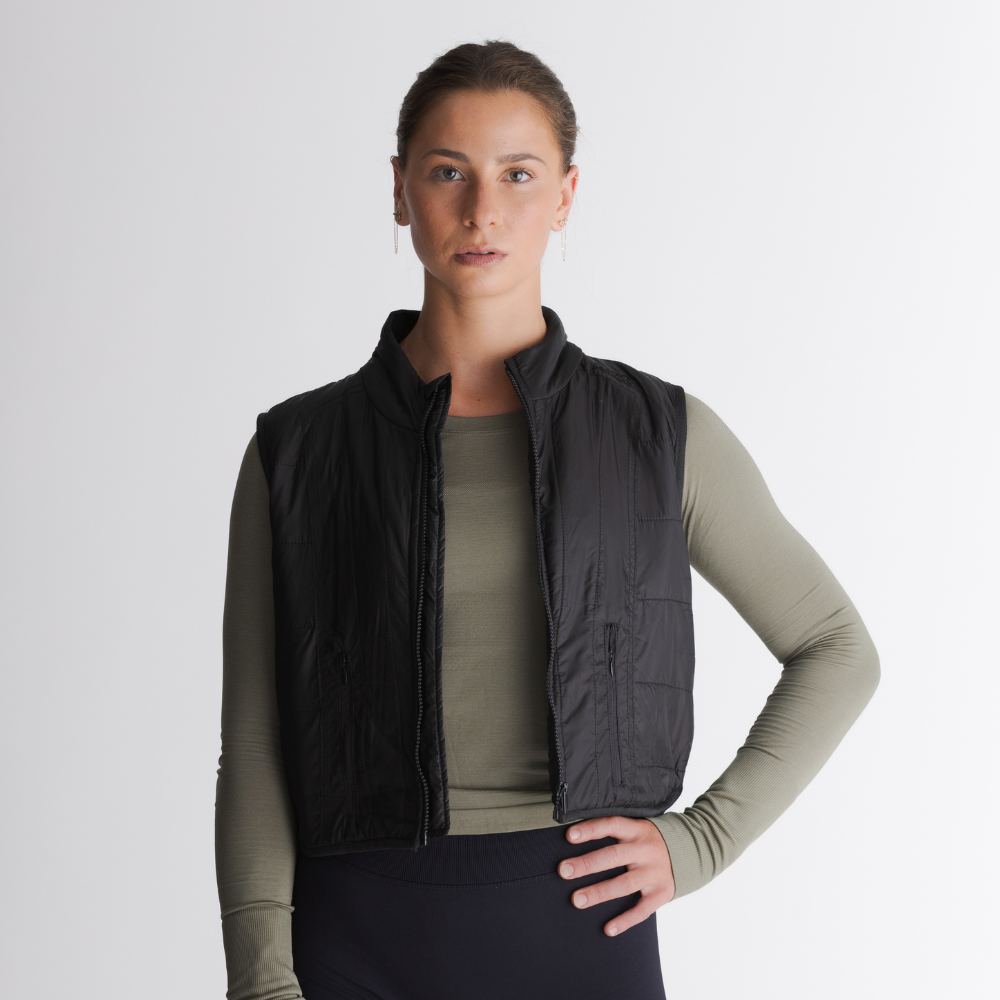
Weighted vest walking is, as the name suggests, simply walking while wearing a weighted vest. It is a more refined form of rucking, as you have far more options for the load and weight distribution when you switch from a rucksack to a weighted vest. Additionally, a well-designed weighted vest like Aion’s will be healthier for your neck, shoulders, and joints.
The typical characteristics of weighted vest walking are:
- Carrying 5-20 lbs of weight
- Loading with distributed weight across the torso (front, back, and sides)
- Walking on flexible terrain (can be on a treadmill, indoor/outdoor tracks, or just in your neighborhood)
- Flexible pacing and intensity
Weighted vest walking is an accessible and scalable alternative to rucking.
If you’re new to the concept, here’s our previous blog on the Top 14 Reasons to Add a Weighted Vest to Your Walk (or Ruck).
The Science of Fat Loss: Understanding What Burns More Fat
Losing weight is one thing; maintaining a healthy weight is another. And at the center of maintaining your ideal weight is effective fat burning.
Today, the hardest workouts are no longer the key to sustainable fat loss. Instead, this fat loss is achieved only when the body consistently burns fat over time through a process that is easy to maintain and does not harm the natural metabolic process.
To consistently burn excessive fat or prevent it from forming, modern training focuses on three key drivers:
1. Burning Fat with a Calorie Deficit
At the most basic level, fat loss requires a caloric deficit. You must burn more energy than you consume to force your body to tap into its fat deposits. Both rucking and weighted vest walking increase this expenditure by adding external load and elevating your heart rate above baseline.
However, the "math" of how they achieve this is very different:
- Rucking spikes your calorie burn quickly. Because the loads are heavy (20-50 lbs), you are burning a massive amount of energy per minute. The trade-off? Most people can only sustain this intensity for 30-45 minutes before their form or joints give out.
- Weighted Vest Walking provides a steady, manageable burn. Because the load is balanced and moderate, you can easily extend your sessions to 60 or 90 minutes and you can do it more often.
The 2026 Perspective: We no longer ask, "Which workout burns more in 45 minutes?" That’s short-term thinking. The smarter question is, "Which tool helps me burn more total calories across 5-6 days?" Rucking is a high-intensity spike; Weighted Vest Walking is a high-volume engine. For sustainable fat loss, the accumulated weekly output of a vest almost always beats the isolated, high-stress effort of a heavy ruck.
This isn’t theoretical, it’s measurable. A recent study featuring the Aion weighted workout vest shows that simply adding an Aion vest to your walk increases your caloric burn by 18%. Over a week of daily 30-minute walks, that’s a massive amount of accumulated energy expenditure that requires zero extra time or a higher-impact pace.
Because fat loss is the result of consistent weekly output, not isolated effort.
2. Maximizing Fat Burn in Zone 2
This is the most critical factor. Your body has different "gears" for burning fuel. When your heart rate is in Zone 2 (roughly 60-70% of your max heart rate, where you can still hold a conversation), your body relies primarily on burning fat cells for energy.
When your heart rate spikes into Zone 3 or 4 (where you are gasping for air), your body panics and switches to burning glycogen (carbohydrates) because it needs faster energy.
- Rucking: Because the load is so heavy and awkwardly placed on your back, it rapidly spikes your heart rate. You burn a massive amount of calories, but you get pushed out of Zone 2 quickly, meaning you are burning carbs, not necessarily fat.
- Weighted Vest Walking: The moderate, balanced load acts as a precision tool. It elevates your heart rate just enough to get you into Zone 2, and allows you to stay there for 45+ minutes, maximizing your fat burn.
Not being in Zone 2 doesn’t mean your exercise is wrong; it just means that you’re missing out on valuable fat-burning opportunities. If your specific goal is fat loss, you can maximize these opportunities and, with greater comfort, do so through weighted vest walking.
In a study of the Aion weighted workout vest, walkers wearing an Aion vest spent 56% of their session in Zone 2, compared to only 26% for those without the vest. By putting on the vest, you are literally doubling your time in the metabolic state where your body prefers to burn fat as its primary fuel source.
We dove deeper into the details of Zone 2 training in another blog: Zone 2 Cardio Training for Burning Fat and Boosting Endurance.

3. Consistency Over Time
The consistency factor of an exercise program was often underrated in the past. But in 2026, it might be the most important factor of all. Think about it. You don’t lose fat from one great workout. You lose fat from repeated, consistent effort over weeks and months.
Most people don’t look at the bigger picture, unintentionally sabotaging their results by choosing:
- Workouts that are too intense
- Loads that are too heavy
- Routines that require too much recovery
The result? Hard workouts that, indeed, burn a lot of calories, but are done inconsistently.
Compare this to a more sustainable approach:
- Moderate intensity workouts
- Manageable load
- Minimal recovery cost
Rucking with 40 lbs is a phenomenal workout, but it taxes your central nervous system, compresses your spine, and requires significant recovery
time. You might only be able to ruck for shorter sessions, 2 or 3 times a week.
Weighted vest walking incurs almost zero recovery cost. Because an Aion Weighted Vest distributes the weight evenly and naturally, you can wear it for substantially longer sessions, 5 or 6 days a week. We have some customers who swear by wearing their Aion Weighted Workout Vest for the gym and training, and wearing their Aion Weighted Lifestyle Vest all day outside of the gym to truly maximize their loaded movement and fat burn throughout the week.
The Math: Burning 300 fat-focused calories 6 days a week (Weighted Walking) yields a higher net fat loss than burning 600 carb-heavy calories 2 days a week (Rucking).
The Verdict: Does Rucking or Weighted Vest Walking Burn More Fat?
Rucking may burn more total calories in a single 45-minute session, making it excellent for tactical athletes who want to build grit and raw strength and aren’t focused on fat loss.
Weighted Vest Walking burns more actual fat over the course of a month. By keeping you in the optimal Zone 2 fat-burning state, protecting your joints, and allowing for near-daily consistency, it is the superior tool for body composition changes.
Still Want to Ruck? The Hybrid Application.
You don't have to choose just one. If you love the intensity and challenge of a 50+ lb ruck, then the ultimate fat loss optimization protocol is a hybrid approach:
- 1 Day a Week: Heavy Rucking (for strength, endurance, and mental toughness).
- 4-5 Days a Week: Weighted Vest Walking (for consistent, Zone 2 fat burn and active recovery).
Gear up for Rucking and Weighted Vest Walking with Aion
By now, the comparison is clear: rucking challenges you with intensity while weighted vest walking builds results through consistency. The real advantage is when you can do both and get the best of both worlds.
That’s where Aion Vests comes in. You can ruck with our high-performance loaded vests that come with Dynamic Resistance™, and train hard when you want to. You can walk or do your everyday chores with our walking and recovery vests, so you can stay consistent when it matters the most.
At Aion, we go beyond just adding weight. We believe that your gear should support both intensity and consistency. Because when you stop choosing between them, you can start building routines and achieving results that actually last.
Rucking vs. Weighted Vest Walking Frequently Asked Questions
Can I use a weighted vest for rucking?
Yes. While traditional rucking uses a backpack, using a high-capacity weighted vest (like the Aion Workout Vest) for a heavy hike is actually superior for your biomechanics. The vest distributes the heavy load across your front and back, preventing the spinal compression and forward lean caused by heavy backpacks.


Is fractional weight enough for a weighted vest walk?
Absolutely. If your goal is fat loss and Zone 2 cardio, a fractional weight of roughly 3-5% of your body weight is the perfect amount of resistance to elevate your heart rate without destroying your running or walking form.
Does weighted walking build muscle?
Yes. Adding load to your torso forces your lower body, specifically your quads, glutes, and calves, to generate more force with every step. Additionally, your core and postural stabilizers must fire constantly to keep you upright, resulting in functional, lean muscle retention.
Is it better to wear a vest for a 30-minute walk or all day?
Both have distinct advantages. A dedicated 30-minute walk with an Aion weighted workout vest is a powerful way to stay in Zone 2 and maximize fat burn. However, the true "secret weapon" for sustainable fat loss is Passive Resistance™. By wearing a low-profile Aion Lifestyle Vest for 2-4 hours during your normal daily routine, standing at your desk, running errands, or doing household chores, you accumulate a higher net caloric burn without the mental or physical fatigue of a "workout." It’s about making your lifestyle do the heavy lifting for you.

Disclaimer: Always consult a doctor before doing any type of exercise.


