


Most people think that if they "exercise" for 30 minutes a day, they are fit. They hit a class, they break a sweat, and they achieve their daily goals. Clinical science, however, draws a hard line between being active and actually possessing high fitness. And that distinction may determine how long and how well you live.
You might be caught in the "exercise vs. fitness" trap, where you think that exercise automatically results in fitness. But in reality, you can exercise regularly and still have low physiological fitness. Conversely, some people do less and still have more efficient hearts, lungs, and mitochondria (energy generators in your cells).
For biohackers, longevity enthusiasts, and performance-driven athletes, high fitness matters. Beyond aesthetics, personal achievement, or bragging rights, it may be the single most powerful physiological metric for predicting human mortality.
In this post, we define what high fitness is, why it rewrites your biological clock, and how you can build it efficiently without destroying your joints or living on a treadmill.
Decoding "High Fitness": The Gold Standard
What does high fitness actually mean? In clinical research, high fitness refers specifically to Cardiorespiratory Fitness (CRF), which is measured by one gold-standard metric, VO₂ max.
VO₂ max is the maximum amount of oxygen, thus the O₂, your body can utilize during intense effort. In research and medical settings, high fitness = high VO₂ max.
Your VO₂ max reflects the integrated performance of your:
- Heart (cardiac output)
- Lungs (oxygen exchange)
- Blood vessels (oxygen delivery)
- Muscles (oxygen utilization)
- Mitochondria (cellular energy production)
It is typically measured during a treadmill or cycling stress test. Because testing a person’s VO₂ max isn’t always practical, researchers often use METs (metabolic equivalents) achieved during a treadmill stress test as an alternative.
METs Benchmarks:
Researchers have set fitness benchmarks for METs, adjusted to sex and age. While several factors may lead to variations in METs, here are the general ballpark ranges for men (will be slightly lower for women):
- Low fitness: <7-8 METs
- Moderate fitness: 8-10 METs
- High fitness: 10-12+ METs
- Elite: 14-18+ METs
While these numbers may seem absolute, they are not. To be considered high fitness doesn’t necessarily mean having 10-12 METs.
High fitness is relative. You’re generally considered “high fitness” if you fall into the top 20-25% for your age and sex.
A 25-year-old and a 55-year-old having similar METs, say 9, have different levels of fitness. The younger person is just hitting average, maybe even lower, METs for their age group. On the other hand, the older person hitting 9 METs is showing above-average physical fitness for their age.
High fitness is not absolute; it’s relative. It’s not cosmetic; it’s metabolic and cardiovascular superiority.
Fitness vs. Exercise
According to the clinical definition of high fitness, you can:
- Exercise regularly and still have low fitness (inefficient heart, lungs, mitochondria)
- Be genetically gifted and have relatively high fitness with less training
Fitness reflects how well your heart, lungs, blood vessels, muscles, and mitochondria work together, not just how often you work out.
The Longevity Data: Why High Fitness Matters
Based on available clinical evidence, cardiorespiratory fitness is a strong and consistent predictor of morbidity and mortality among adults. Studies show that every 1-MET increase in fitness results in a 10-15% reduction in all-cause mortality. This relationship is:
- Linear (as MET increases, all-cause mortality decreases proportionally)
- Dose-responsive (the higher the MET increases, the greater the effect on morbidity and mortality)
-
Stronger than many medications

In the field of disease research, these findings are enormous. They are proof that small improvements in cardiorespiratory fitness yield measurable reductions in:
- Cardiovascular mortality
- Cancer mortality
- Neurodegenerative risk
- All-cause death
Years Added to Life
High fitness dramatically extends lifespan. Compared to low-fitness individuals:
- Moderately fit individuals live an average of 3-5 years longer
- Highly fit individuals live an average of 5-8+ years longer
And that’s average, not the best case.
That’s not even the most encouraging part; it is this: the steepest drop in mortality risk happens when someone moves from low fitness to moderate fitness. You don’t need to be elite. You just need to escape the bottom quartile.
Beating Traditional Risk Factors
High fitness attenuates or even cancels out the mortality risk of:
- Obesity
- Hypertension
- Type 2 diabetes
- Metabolic syndrome
- High cholesterol
- Smoking history (not current smoking, but past)
Fitness Trumps Fatness
Multiple studies show that an obese but highly fit person has a lower mortality risk than a lean but unfit person. This doesn’t mean body composition doesn’t matter. It means that cardiorespiratory efficiency may be the more powerful lever. For pure longevity, VO₂ max matters more than visible leanness.
The Mechanisms: What Goes On In Your Cells
Why does no pill match the effect of taking your VO₂ max to the next level? Because the high fitness effect optimizes multiple biological pathways simultaneously:
1. Cardiac Output
Your heart becomes stronger and more efficient. Stroke volume, or the measure of your heart’s pumping power, increases. Resting heart rate drops. Your heart does more work with less strain.
2. Vascular Health
Your blood vessels become better at regulating the flow of blood and other substances along your circulatory system. Your blood pressure drops to normal, and your arteries become more compliant and efficient.
3. Cellular Energy
The concentration of mitochondria in your cells increases. Your cells will have more energy-producing capacity and at a higher efficiency. Fat-burning improves, and insulin sensitivity rises.
4. Inflammation and Autonomic Balance
Your inflammatory and immunity responses are better regulated, reducing chronic inflammation. Your cortisol levels remain at baseline, decreasing your stress load. Your nervous system shifts toward a “rest and recover” mode, promoting faster recovery and stress resilience.
5. Brain Health
Your cardiovascular system delivers more oxygen and nutrients to your brain tissue. Your body produces more brain growth factors, improving neural connections, thus increasing neuroplasticity. The risk of neurodegenerative diseases like Alzheimer’s drops.
This is why high fitness is so powerful: it targets every major aging pathway at once. No single drug does that.

Cardio vs. Strength
There is nuance there. Making the distinction between cardio and strength fitness is essential:
- Cardiorespiratory fitness is the strongest predictor of lifespan (how long you live).
- Muscle strength strongly predicts healthspan (how well you live: independence, fall prevention, metabolic resilience).
The best long-term outcomes require both.
However, what if you had to pick one for pure mortality reduction? Cardiorespiratory fitness wins. But the real longevity advantage comes from combining oxygen-demanding movement with load-bearing resistance.
Which raises the obvious question: How does the average person increase their VO₂ max to the upper quartile (20-25%) of their age group without running themselves into the ground?
The Aion Solution: Hacking Your METs
If you’re like most people, you’d assume that improving VO₂ max requires intense and prolonged physical activities like running or high-impact interval training (HIIT). That’s not necessarily true.
VO₂ max improves when oxygen demand increases. And oxygen demand increases when your body has to do more work.
This is where the Aion Weighted Vest becomes a precision tool for longevity.
How Aion’s Weighted Vests Help You Reach High Fitness
By adding 3-5% of your body weight via Fractional Loading™, you don't just feel heavier—you alter your cardiovascular demand. Wearing an Aion vest allows you to:
- Increase maximum oxygen demand (VO₂ max): Your heart and lungs must work harder to supply oxygen to muscles under constant tension.
- Shift simple movement into Zone 2 cardio: This isn't a guess; it's clinically proven. In a study featuring the Aion workout vests, participants walking with the vest spent 56% of their time in Zone 2 (the optimal zone for building that aerobic longevity base), compared to only 26% when walking without it.
- Amplify metabolic burn: The same study showed that simply walking with an Aion vest increases caloric burn by 18%, while performing HIIT training with the vest spikes the burn by an incredible 69%.
- Simultaneously stimulate muscular engagement: You build the leg and core strength required for a longer healthspan.


Instead of needing to run, you can:
- Walk the dog
- Take a brisk neighborhood loop
- Hike moderate terrain
- Use an incline treadmill
A weighted vest adds a strength training element to all of your cardio workouts, while increasing the cardio demand. And with Aion, in particular, our line of lifestyle vests, like the Women’s Walking Weighted Vest and Men’s Recovery Vest, empowers you to easily build cardiorespiratory fitness and muscular strength simultaneously during your everyday movements.
It’s the ultimate two-for-one biohack. You get the lifespan benefits of high fitness (cardio) and the healthspan benefits of load-bearing movement (strength), all while walking the dog. You are literally getting more physiological ROI for the exact same time investment.

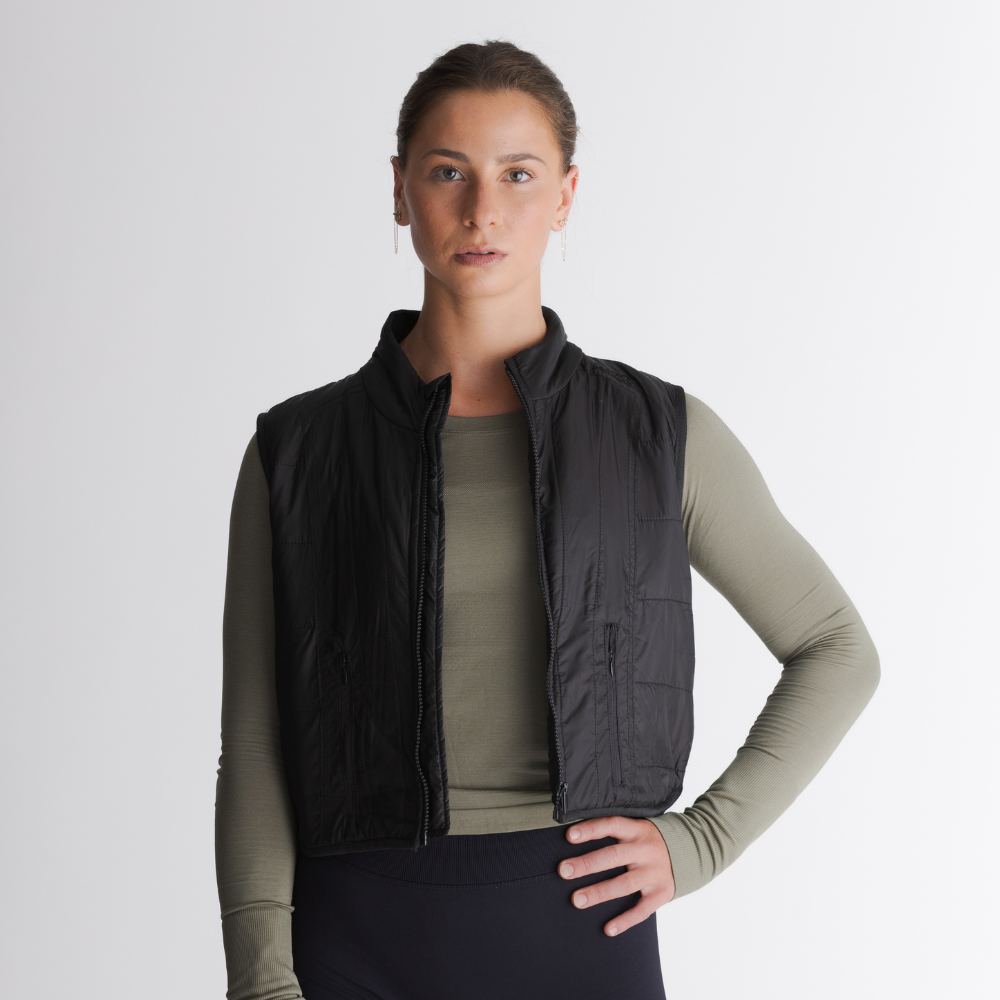
Escape The Bottom Quartile and Achieve High Fitness with Aion
Escaping the bottom quartile is the single most important thing you can do for your longevity. Go beyond the aesthetics and social rewards. Train for the metric that actually predicts survival: cardiorespiratory fitness. Focus on progressive oxygen demand.
With Aion, you can elevate your VO₂ max and achieve high fitness without marathon mileage, joint strain, or sacrificing your schedule.
High Fitness FAQs
Q: How do I test my VO₂ Max or METs?
A: The direct method is a clinical treadmill or cycling stress test administered in a lab setting. However, most smartwatches and fitness trackers today can provide a reasonably accurate estimate of VO₂ max based on heart rate and performance data.
While not perfect, these watches and trackers are excellent for spotting trends over time. If your watch says your VO₂ max is improving, your mortality risk profile is likely improving with it.
Q: Do I need to run to achieve "high fitness"?
A: No. Brisk incline walking, hiking, or walking with an Aion weighted vest regularly can generate enough oxygen demand to stimulate cardiorespiratory improvement, pushing you into the high fitness category.
Do not focus on the activity, but on oxygen utilization. If your heart and lungs are working harder, adaptation occurs.
Q: Can you improve your fitness level at any age?
A: Yes. The body remains highly responsive to cardiorespiratory training well into your 70s and 80s.
While VO₂ max naturally declines with age, consistent cardiovascular training can effectively slow down that decline. It is never too late to move out of the low-fitness category.
Disclaimer: Always consult a doctor before doing any type of exercise.


