


Walking is the most underrated tool in fitness. It requires no gym membership, no equipment, and zero learning curve. But can the calories you burn by walking really lead to weight loss and fitness benefits? Are you burning enough to lose weight? Is your daily stroll actually moving the needle?
The best way to answer that is to calculate how many calories you burn every time you walk. When you understand the numbers, you can optimize them for greater impact. You can turn a basic activity into a precise tool for fat loss and conditioning.
In this guide, we give you the tools to calculate your exact burn. More importantly, we show you the simple hack to increase that burn by 18% without walking a single step further.
The Walking Calorie Calculator
Forget manual math. Use our custom calculator below to get an instant estimate of your caloric expenditure based on your weight, pace, and duration.
Walking Calorie Estimator
*Estimates based on METs formula.
Note: Want to see the math behind the numbers? We’ve broken down those details in the FAQ section at the bottom of this page.
Why The Numbers Matter
Knowing your calorie burn isn't just about data; it's about control.
- Targeted Fat Loss: Weight loss is a numbers game. Knowing you burned exactly 300 calories on your morning walk allows you to perfectly balance your intake for a caloric deficit.
- The "Progress Trap": As you get fitter, your body becomes more efficient, meaning you burn fewer calories doing the same activity. Tracking your numbers helps you spot this plateau so you can increase intensity.
- Motivation: "Exercising more" is a vague goal that fails. "Burning 400 calories before breakfast" is a mission you can execute every single day.
The Weighted Vest Life Hack: Burn 18% More Calories on Your Walks (Without Walking Longer)
Here is the reality check: walking is efficient, but it takes time to burn significant calories. If you don't have 90 minutes a day to walk, you need a way to make every minute count for more.
Enter the Aion Weighted Vest.
A study featuring Aion’s workout weighted vests proved that wearing an Aion vest during a standard walk increases caloric expenditure by 18%.
- Standard Walk: 300 Calories burned.
- Aion Weighted Vest Walk: 354 Calories burned.
Over a week, that difference is an entire extra walk's worth of calories burned without spending a single extra minute walking.
How It Works:
Weighted vests add resistance. Your muscles must work harder to move the added load, demanding more oxygen and energy. You engage your core, stabilizers, and legs more deeply with every step, turning a "stroll" into a metabolic conditioning session.
Beyond the Burn: Why Add Resistance?
Calorie burn is just the start. When you upgrade your walk with an Aion vest, you unlock long-term physiological benefits that walking alone cannot provide.
1. Build Bone Density
Walking is low-impact, which is great for joints but often not enough to stimulate bone growth. The added load of an Aion vest provides the critical stress needed to stimulate bone-building cells, helping to prevent osteopenia and osteoporosis as you age.
2. Strengthen Your Core & Posture
A standard walk uses your legs. An Aion walk uses your entire body. The vest forces your postural muscles to engage to keep you upright, strengthening your back and core while you move. It’s a workout for your posture that happens automatically.
3. Improve Cardiovascular Health
The added resistance forces your heart and lungs to work slightly harder, pushing you closer to "Zone 2" cardio—the optimal zone for improving heart health and endurance. You get better cardiovascular conditioning without having to run. Adding an Aion vest to your walk will 2X your time spend in Zone 2.
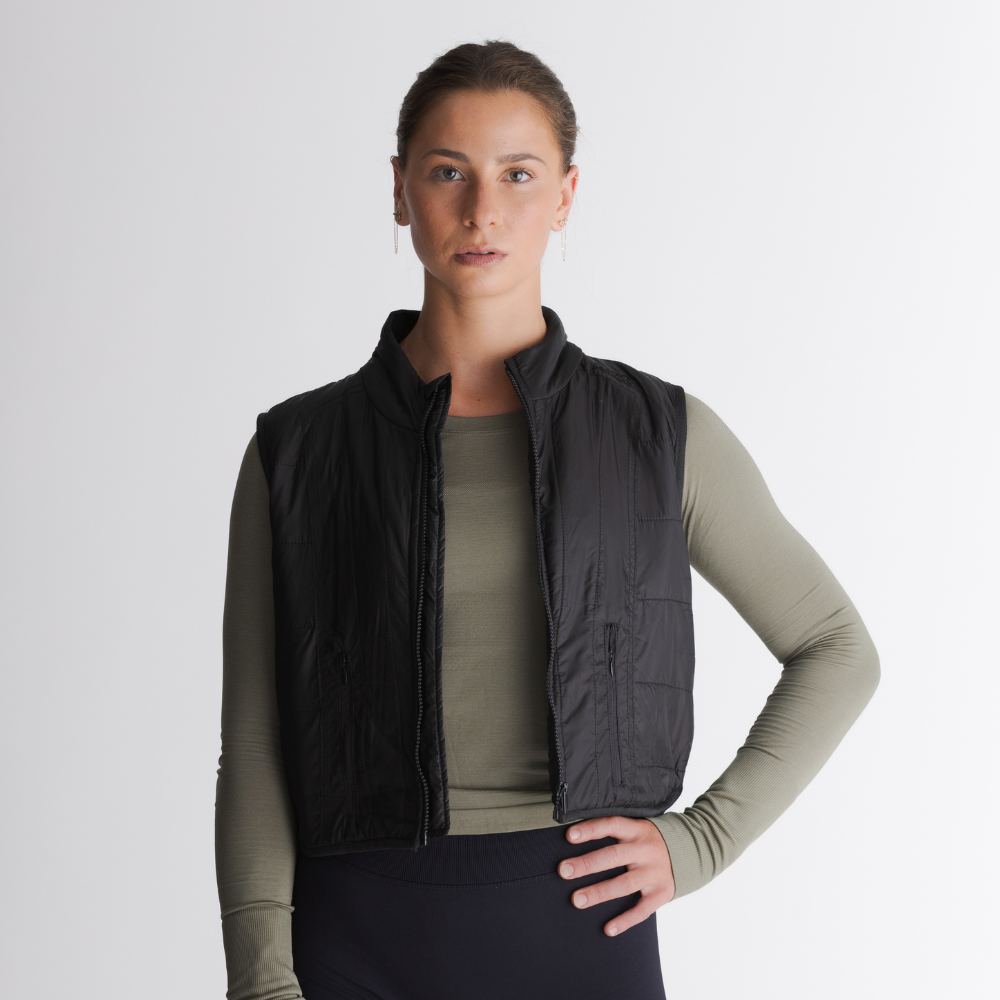
The Ultimate Tool: The Women’s Weighted Walking Vest
Most weighted vests are bulky, uncomfortable, and designed for the CrossFit box. We built the Women’s Weighted Walking Vest specifically for the daily walker.
- Passive Resistance™: Sleek, targeted weight that boosts calorie burn without restricting movement or balance.
- Designed for Her: A cut that fits a woman's natural frame, eliminating the bulk and bounce of traditional tactical vests.
- Style Meets Function: Minimalist design with premium materials that look good enough to wear anywhere—from the park to the coffee shop.
Don’t worry, we made one for men too: The Men’s Recovery Vest
The benefits of weighted walking—bone density, metabolic conditioning, and posture correction—aren't just for her. We engineered the Men’s Recovery Vest to deliver the same "Passive Resistance" in a cut designed for a man's frame.
- Passive Resistance™: This isn't a bulky tactical vest. It packs 5.5 lbs of streamlined weight, allowing you to increase the caloric burn of your walk or commute without looking like you just left the gym.
- The "Boardroom" Look: Designed with a premium aesthetic that fits seamlessly over a t-shirt or under a blazer. You can wear it from your morning walk straight into a meeting.
- Posture & Recovery: The strategically placed weight gently pulls the shoulders back, correcting "tech neck" and poor posture while promoting active recovery.

Stop Just Walking. Start Training.
You are already doing the work. You are already taking the steps. Why settle for baseline results when you could be getting 18% more out of every movement?
Frequently Asked Questions: The Math Behind Calories Burned Walking
Q: How is calorie burn calculated?
Our calculator uses the METs (Metabolic Equivalent of Task) formula. A MET represents the energy cost of an activity compared to resting.
- Strolling: ~2.0 METs
- Brisk Walk (3.5 mph): ~5.0 METs
- Power Walk (4.5 mph): ~6.3 METs
Q: What is the formula to calculate calories burned?
The basic formula is: Calories Burned = (BMR x MET / 24) x Duration (Hours).
BMR (Basal Metabolic Rate) is estimated using the Mifflin-St. Jeor equation, which accounts for your weight, height, age, and gender.
Q: Does walking speed really matter?
Yes. Intensity is the biggest variable in calorie burn. A 150lb person walking for one hour burns approximately:
- 2.5 mph (Leisure): ~200 Calories
- 3.5 mph (Brisk Uphill): ~400 Calories
- 4.5 mph (Very Fast): ~430+ Calories
These numbers will vary depending on your body weight, stride, and other factors, but they provide you with a good starting point.
Q: Can I trust the numbers from fitness trackers to calculate my calories burned walking?
Trackers are estimates. They often overestimate burn by 10-20%. The best approach is to use these numbers as a baseline to track relative progress (i.e., "Did I burn more today than yesterday?") rather than the absolute truth.
Q: How do I increase my calories burned walking?
If your walking sessions are not giving you the numbers that you need, and increasing the duration and speed of your walks is impossible, you can turn to Aion Weighted Vests. Aion adds extra weight, which means extra resistance, engaging your body to work harder and burn more calories. In other words, the muscle groups responsible for moving you forward will have to burn more calories because they need more energy to power a now “heavier” you–all without increasing your distance or walking faster.
Q: How much weight should I add to my walk?
For walking, we recommend a vest that is 3-5% of your body weight. Aion’s Walking Vests are calibrated specifically for this range (roughly 6-8 lbs), providing the optimal balance of increased burn without altering your natural gait mechanics.
Q: Why should you track how many calories you burn while walking?
When you understand how your daily walk affects how you use your daily energy, you can make smarter decisions that align with your health and fitness goals.
Here’s why calorie burn calculations matter:
- To keep you on track. Understanding your calorie burn is key to balancing your calorie input (what you eat) and output (how active you are). It’s the only healthy and sustainable way to lose, gain, or maintain your weight. Knowing your calorie burn makes vague goals measurable and easier to track. For example, “exercising more” becomes “burning 500 Calories daily by walking.”
- To motivate yourself. When you see how much you burn, you experience a sense of accomplishment, encouraging you to be consistent or push harder. If you complete your goal of burning 500 Calories by walking, you get tangible proof, an actual result of your hard work. Over time, your efforts, no matter how small, will add up and benefit your overall health.
- To optimize your workouts. By calculating your calorie burn while walking, you get a measurement of your baseline. From there, you can experiment: walk faster or longer, take on slopes or harder terrain, or even wear a weighted vest to level up your burn.
- To keep leveling up. As you exercise, your body becomes more efficient and naturally adapts to your activity level. This means that eventually, you might burn fewer calories doing the same activity. If you track your calorie burn, you can spot when it’s time to increase intensity or try new challenges.
Disclaimer: Always consult a doctor before doing any type of exercise.


